
A speak‑up channel without a speak‑up culture is a liability. In 2025, most mid‑size companies have hotlines and inboxes, yet many still struggle with low usage, slow triage, and fear of retaliation. The lesson from the last decade is clear: whistleblowing works only when leadership, process, and technology reinforce each other and when reporting is tied to timely remediation. Here is what compliance leaders in intermediate‑sized enterprises can learn and apply now.
What regulators really expect from speak‑up channels
Across anti‑corruption, antitrust, criminal compliance and AML regimes, the requirements converge on three fundamentals: accessible reporting, protection for reporters, and documented, timely handling. Tie your program to the frameworks you already use.
If you operate in the EU, your approach should also align with the Whistleblower Directive’s confidentiality and non‑retaliation provisions. See Directive (EU) 2019/1937.
Lessons learned from real programs
- Trust beats tooling. Employees report when they believe leadership wants the truth and will act fairly. Without visible support, the best software will not rescue your numbers.
- Anonymous does not mean opaque. Offer anonymity, but design investigations to corroborate with facts, not identity. Use targeted follow‑up questions through the case portal.
- Intake must be multi‑channel and multi‑lingual. Web portals, phone, manager‑assisted reporting, and in‑person options catch different risk profiles and demographics.
- Speed matters. The first 72 hours set the tone. Acknowledge receipt fast, then communicate the plan and expected timelines. Silence breeds escalation and media risk.
- Triage is a risk discipline, not a mailbox. Classify by domain, severity, and potential legal exposure, then route to the right, independent owner with service levels.
- Retaliation prevention is not a disclaimer. Track reporter status over time, engage HR early, and monitor for subtle workplace changes.
- Investigations are a craft. Standardize evidence handling, interview protocols, and privilege rules. Small teams can still be rigorous with templates.
- Close the loop visibly. Provide outcome themes to the workforce, even when details stay confidential. It builds collective trust and deters misconduct.
- Learn, then fix. Every substantiated case should map to a control gap and a remediation action with an owner and a due date.
- Measure culture, not just cases. Pair hotline metrics with pulse surveys about psychological safety and fairness.
Design a channel people actually use
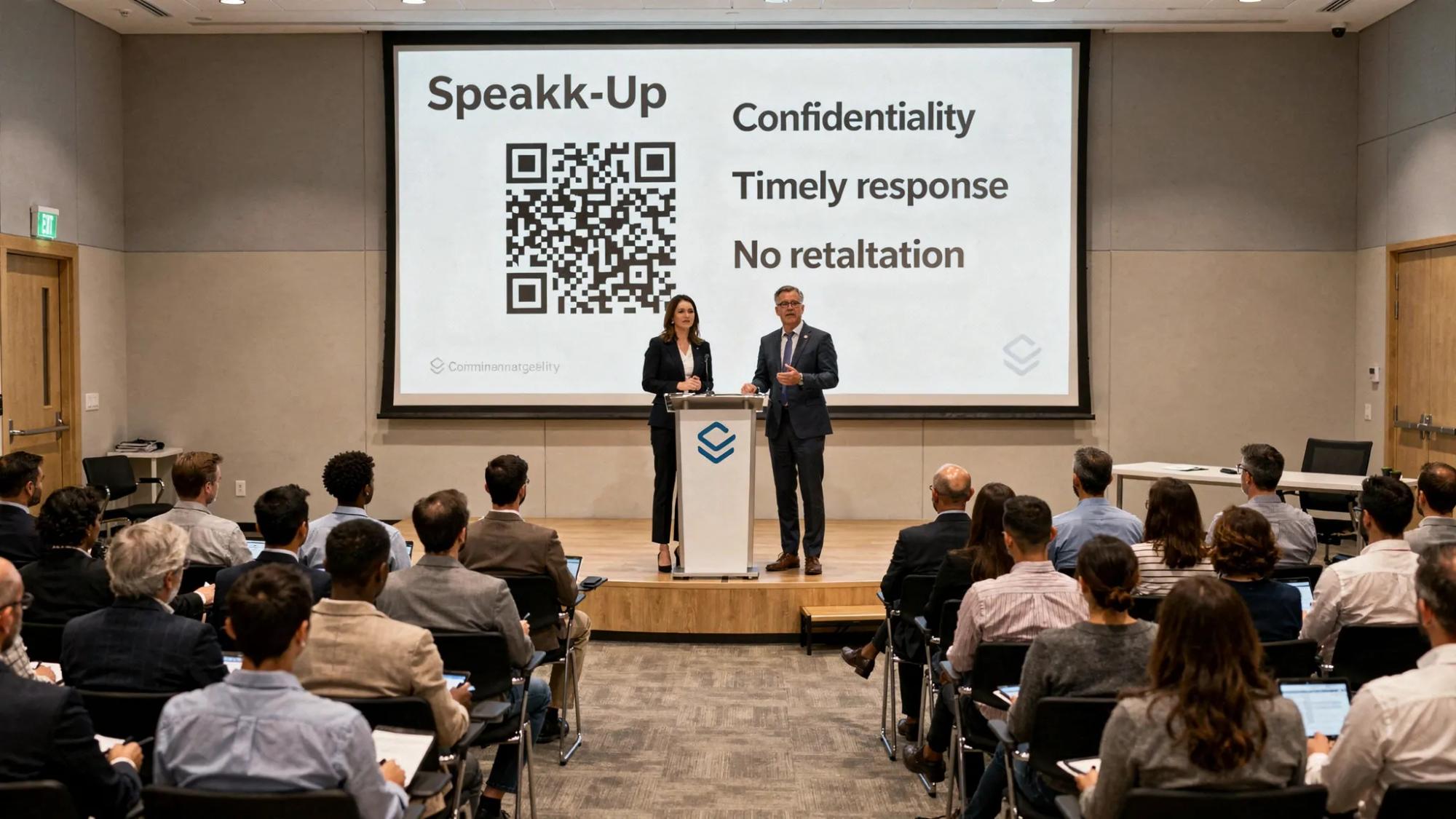
- Make it easy to find. Put links in your intranet header, vendor portal, and code of conduct. Print QR codes for sites without desks.
- Offer choice. Allow named and anonymous options, and be explicit about how each is handled.
- Promise privacy clearly. Explain data handling, retention, and access in plain language that employees can trust.
- Separate roles. Keep intake, investigation, and disciplinary decisions segregated. This is central to ISO 37001 and UNE 19601 practice.
- Protect managers and reporters. Train managers to escalate, not investigate, and to avoid commentary that could be construed as retaliation.
- Localize wisely. Mirror the group standard, but adapt language, examples, and contact points to local realities and UNE 19603 antitrust risks in associations and sales networks.
- Protect confidentiality. Make sure people involved in the investigation (investigators, reporters, witnesses, etc.) keep information confidential.
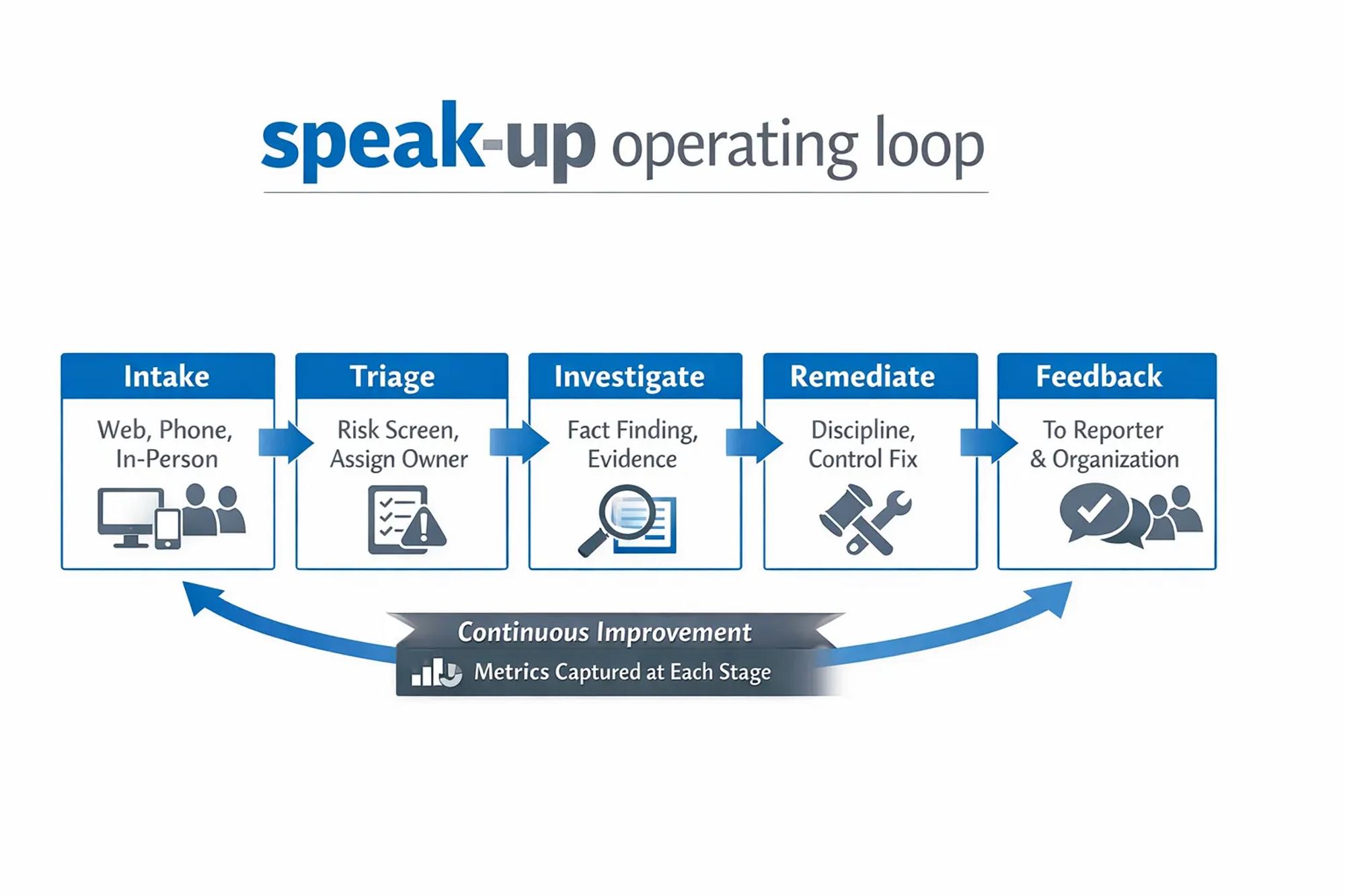
From report to remediation, the operating loop
- Intake, capture only what you need. Avoid over‑collection of personal data. Allow attachments and time‑stamped updates.
- Triage, apply a risk screen. Tag by domain, severity, geography, business unit, and potential framework impact, for example Sapin II or Antitrust.
- Investigate, standardize. Use checklists for interviews and evidence, define privilege boundaries, and document every step.
- Remediate, fix the root cause. Link each case to a corrective action. Close actions with evidence, not statements.
- Feedback, build trust. Update the reporter on progress and communicate themes to the wider company quarterly.
What to measure and show your board
Healthy speak‑up programs look different from unhealthy ones. Use a compact set of metrics that tie to culture and risk outcomes.
- Usage rate, reports per 100 employees, segmented by channel and country
- Time to first acknowledgment and time to triage
- Substantiation rate by category, corruption, antitrust, fraud, harassment, AML
- Time to close by severity band
- Retaliation index, post‑case HR checks over 6 to 12 months
- Control impact, number of remediation actions created and closed from cases
- Anonymous engagement, percentage of anonymous reports with two‑way dialogue
For board‑ready definitions and data sources, see our guide to dashboard metrics on residual risk, control effectiveness, and speak‑up health.
Common pitfalls and how to avoid them
- Over‑promising confidentiality. Be precise about who can access what, and how you protect identities.
- Legal privilege confusion. Decide, document, and train on when legal privilege applies and how to preserve it.
- Retention missteps. Set proportionate retention aligned with local law and document exceptions.
- Single point of failure. Do not rely on one person to triage and investigate. Create bench strength and backups.
- Silence after submission. Acknowledge fast, even if only to provide a timeline and contact window.
Frequently asked questions
Do we really need anonymous reporting if we already have confidential channels? Anonymous options increase psychological safety, especially in high‑power‑distance cultures. You can still conduct robust investigations with anonymous reporting using portal follow‑ups and evidence.
What is a good substantiation rate? Context matters. Track your own baseline by category. Pair the rate with cycle times and remediation actions closed to avoid gaming the metric.
How do we prevent retaliation in practice? Monitor reporter employment conditions for 6 to 12 months, brief managers, and route HR changes through an independent check. Communicate zero tolerance and enforce it consistently.
Where should the speak‑up function sit? Keep intake and triage independent, for example within Compliance, with Legal advising on privilege and HR partnering on remedies. Ensure escalation paths to the audit committee for high‑severity cases.
Can AI review cases or write investigation reports? AI can summarize and structure information and trigger workflows, but final judgments should remain with trained investigators. Maintain transparency and a human‑in‑the‑loop model, consistent with the EU AI Act’s emphasis on oversight.
What should we show the board each quarter? Usage and timeliness, substantiation by category, retaliation checks, and the number of control improvements stemming from cases. Keep it trend‑based and action‑oriented.